
They imagine, research, design, and transform the experiences of tomorrow. Through this series of interviews, discover the backgrounds, expertise, and inspirations of our consultants.
In this fourth episode, discover the portrait of Emilie , a designer with a hybrid profile combining UX Research and UI design . On assignment at STIB/MIVB in Brussels, she shares a pragmatic vision of the profession: from the demands of the field to the real impact of AI on the future of designers.
Who is Emilie?
Emilie initially aspired to a career in traditional graphic design, but the lack of objectivity in creative feedback led her to seek a more rational framework. It was on the advice of her brother, an iOS developer, that she discovered digital design : a world where creativity is expressed while respecting ergonomic standards and clear user experience guidelines . After a Bachelor's degree in Web Design, where she gained experience in UI design and front-end development, she furthered her education with a Master's degree specializing in UX Research.
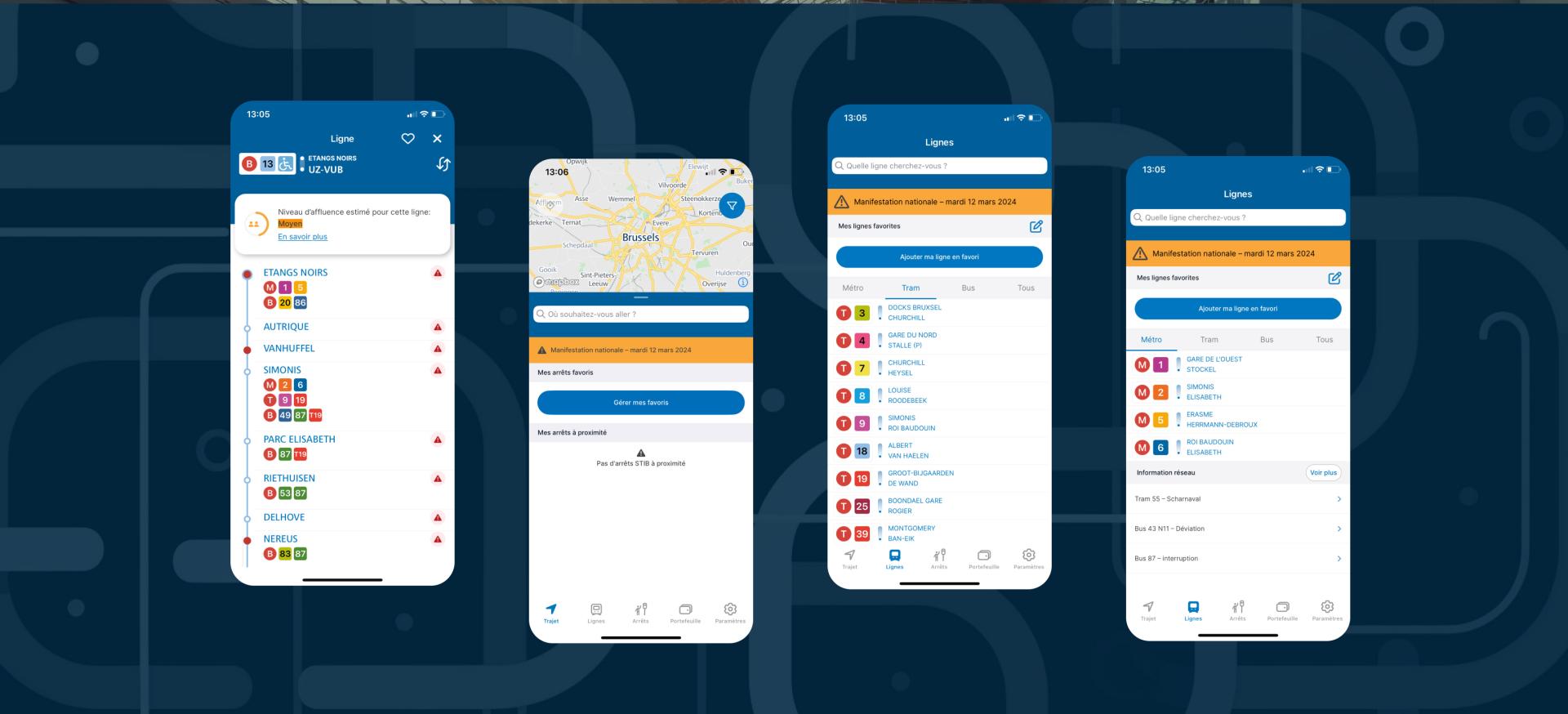
Having joined UX-Republic (Smile group) in early 2025, this hybrid designer has been working on a series of large-scale projects for companies such as Renmans , ASD-Europe and STIB/MIVB in Brussels, where she designs mobile interfaces deployed to thousands of users on a daily basis.
From theory to practice: what is UX & Service Design?
Inès & Paul: How would you define UX Design for someone who is discovering the profession, and how does it apply in practice?
Emilie: UX Design is primarily about understanding how a user can achieve their goal on a product in the smoothest possible way: whether it's to buy an item, make a reservation or find key information.
To achieve this, we conduct interviews , administer tests , analyze what other market players are doing, and draw inspiration from multiple existing career paths.
It's important to understand that UX design isn't limited to screens; it also applies to service design . We experienced this firsthand at Decathlon, where the challenge was to design the overall experience, both online and in-store, for signing up for a bicycle lease. This involved mapping every step of the experience, from the initial interaction with a salesperson to logging onto the website.
Inès & Paul: What types of projects and media do you work on on a daily basis?
Emilie: It's very varied! Today, I'm on a long-term assignment at STIB (the Brussels intercommunal transport company) within the Mobile App department. For the past year and a half, I've been working on new interfaces, screen updates, handovers with the development teams, and updating the design system.
As this mission is carried out two days a week, I manage other projects in parallel for websites, business applications or the creation of Design Systems . I have thus been able to work for the butcher chain Renmans on the redesign of their Click & Collect service, for the intranet of ASD (Aerospace and Defence Industries Association of Europe), or even for RTBF (the Belgian public broadcaster).
Whether it's creating shared components on Figma or designing a comprehensive user journey, my core activity remains the creation of useful and engaging screens.
AI in everyday life: increased speed and market realities
Inès & Paul: Artificial intelligence is transforming our jobs. What tools do you use on a daily basis and how do you perceive this evolution?
Emilie: I see our profession transforming towards greater efficiency . By automating repetitive tasks, AI tools save us valuable time to focus on strategic thinking and high-value design.
Beyond chatbots like ChatGPT, my preferred tool remains Figma and its advanced AI capabilities . These options allow us to link our components, adapt our screens, or generate new variations via simple text queries (prompts via Figma Make). Leveraging our Design System , the tool can very quickly generate screen flow diagrams.
This is a major advantage on short projects where business teams need to quickly get a visual overview or a functional prototype to envision the project, without seeking pixel-perfect perfection from the first draft.
Inès & Paul: Do you feel threatened by this automation or do you see it primarily as an opportunity?
Emilie: Seeing an increase in efficiency is certain, but we must remain realistic. On most of my projects, I am the only designer on the team: as long as there is a need for interfaces designed for humans , the role of UX designer will remain essential.
On the other hand, AI is transforming the job market: by automating simple tasks, it raises the bar for junior profiles , who are now expected to become autonomous more quickly. The real pitfall for the next generation is relying too heavily on machines from the outset and skipping the fundamental learning process of researching independently and honing one's own critical thinking skills.
The irreplaceable value of human beings: field experience
Inès & Paul: What aspects of design can AI never replace?
Emilie: What AI can never replace are real users : their feelings, their spontaneous reactions and the way they physically interact with an interface.
We will always need to interact directly with people in the field , to observe whether they click in the right place or if the information is found organically. Machines cannot recreate the human experience for us.
Furthermore, user feedback is subject to interpretation: it will always require the sensitivity of a human eye to analyze the responses on our screens, detect key verbatim comments and build a logical thread.
Training, community and monitoring: nurturing your design practice
Inès & Paul: How do you maintain your curiosity and preserve your critical thinking skills on a daily basis?
Emilie: The key is continuous training and openness to new methodologies and tools . Through UX-Republic, I've had the opportunity to attend conferences like UX Days (Flupa), UX Brighton, and Into Design Systems, where I learn about the latest developments in the field. I also have access to the Udemy platform , where I regularly take courses as soon as something interesting comes out, for example, on AI or accessibility.
I also place great importance on sharing with my peers , whether they are UX designers or developers. In Belgium, I participate in networking events like UX Beers . Meeting the community and discussing the evolution of our practices forces us to think outside the box and enrich our vision of the profession.
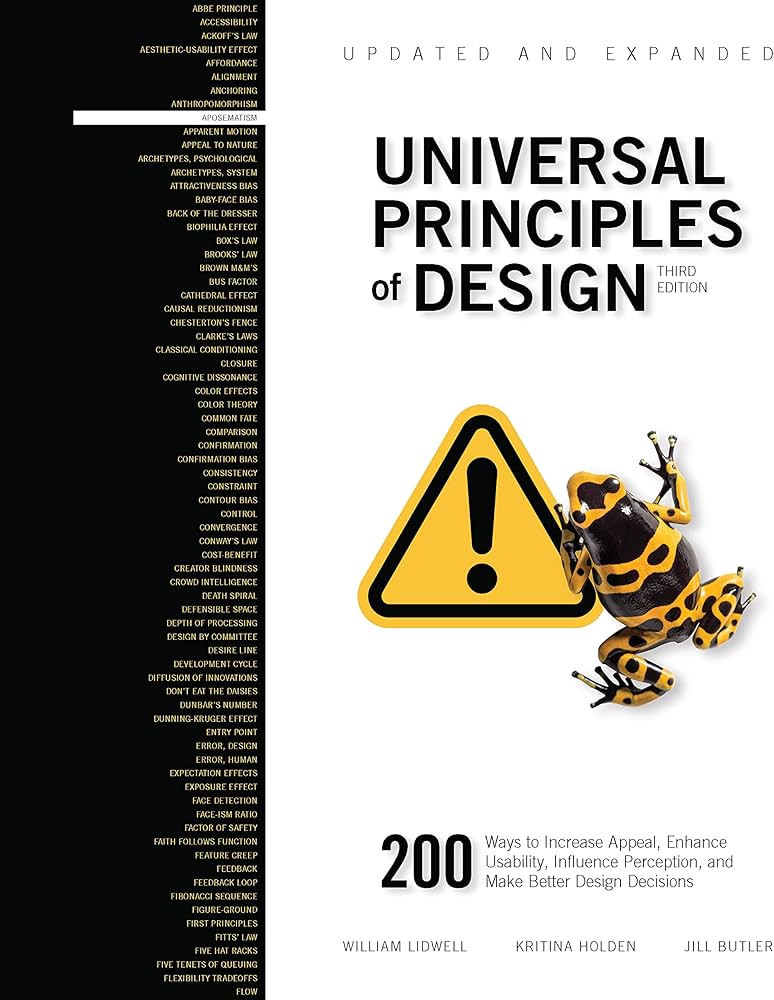
Finally, I read a lot of specialized books. I particularly recommend two essential classics: Universal Principles of Design by William Lidwell and The Design Thinking Toolbox by Michael Lewrick. That said, the books that helped me the most in my early days were Don't Make Me Think by Steve Krug for understanding web ergonomics, and The Design of Everyday Things by Don Norman for grasping the principles of user-centered design.

Inès Mallick
Digital Marketing & Communications Assistant at UX-Republic

Paul Courtois
Digital Marketing & Communications Assistant at UX-Republic
