
The talents at UX-Republic are as rich as they are varied. This series of interviews highlights their expertise, their career paths, and their approach to design challenges.
In this fifth episode, discover the profile of Élodie , UX/UI Product Designer and transformation strategy specialist . With over 25 years of experience , she shares her vision of design rooted in listening to people , solving complex problems, and ease of use, while also offering her insightful perspective on the evolution of our professions in the age of AI.
From artistic journey to transformational design
Paul: Can you introduce yourself and tell us what led you to digital design?
Élodie: I'm Élodie, a UX/UI Designer at UX-Republic since 2023. I have a hybrid background, combining UX, UI, and strategy . With an artistic training background, including a degree in fine arts and a master's in multimedia , I've worked in digital design for over 25 years.
I started with pure creation: freelance web design, webmastering, and art direction. But very quickly, I felt the need to go beyond the purely visual to understand the "why" and "how" behind a client's requests. It was this need to understand the contexts upstream that led me to move towards Design Thinking , discovery , and user research.
Paul: How did you come to join UX-Republic?
Élodie: I'd been reading the UX-Republic blog and documentation since the beginning; it was a real reference for me. In 2023, I was looking to get involved in long-term projects and develop a sustainable design approach . UX-Republic was looking to establish a presence in Lyon at the time: my profile was a perfect match to represent and develop this new branch.
Field experience: simplifying access to public aid for farmers
Paul: Can you tell us about a significant mission that clearly illustrates your role in the field?
Élodie: One of the most rewarding missions was my work with the Auvergne-Rhône-Alpes Region . The challenge was to rethink their services to users, and we focused particularly on the farmers' experience.
When farmers are struck by a natural disaster, they are heavily reliant on financial aid from the Region. However, the process of applying for this aid was a real obstacle course , extremely cumbersome and tedious. Therefore, I conducted observation and co-design workshops directly with them and their representatives to map their actual difficulties.
The goal was not to imagine things in our own corner, but to understand their reality on the ground in order to drastically simplify their procedures and allow them to easily access the assistance they need.
AI in everyday life: a design accelerator
Paul: How do you integrate AI into your daily work?
Élodie: Having witnessed the early days of the Web, I see AI as a major new wave of transformation . It's a very valuable tool that provides me with great services on a daily basis.
For example, in UX writing , AI allows me to quickly challenge labels, write summaries, or test recommendations. It also saves a huge amount of time for data analysis , as it performs a very time-consuming initial filtering of user search transcripts, making my work easier before I can apply my critical eye.
Finally, I use it extensively for prototyping via generators on Figma . This allows me to create schematic flows in minutes to quickly validate the mechanics of an interface with the client.
The irreplaceable value of human beings: maintaining perspective
Paul: What is the key skill for a designer today in the face of these new tools?
Élodie: Curiosity, but above all, perspective . You have to experiment with AI without ever blindly accepting everything . This is essential to mastering your work and ensuring that the tool's response truly meets the initial need.
In five years, AI will likely have taken over the most demanding and repetitive tasks . But this is excellent news, because it will free up our time to focus fully on what no machine will ever replace: empathy, human listening, and solving complex problems for users.
Training and sources of inspiration
Paul: What are your reading recommendations for progress?
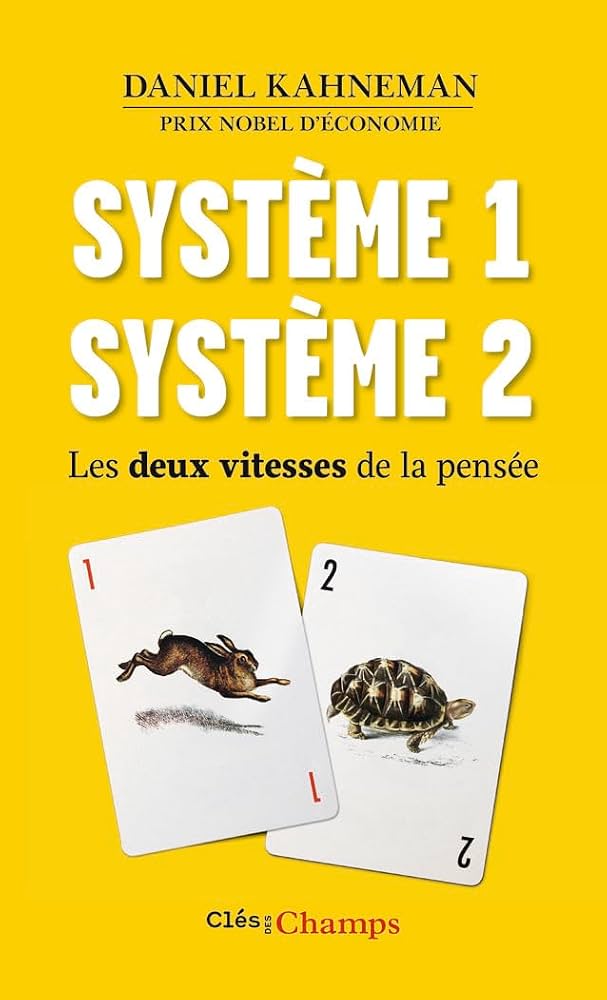
Élodie: To inform my thinking, I read a lot of specialized books. I particularly recommend Carine Lallemand 's books , which are essential for fully grasping UX methodology . Then there's Thinking, Fast and Slow by Daniel Kahneman . It's a seminal book on cognitive logic that profoundly changed my approach to designing interfaces and understanding how the human mind works.
A word for the community
Paul: What message would you like to convey to future designers?
Élodie: A message of confidence: everything will be fine ! Don't be afraid of evolving tools; design remains a fascinating profession based on curiosity and creativity . Whether you're a UX, UI, or Product Designer, we all share the same passion for problem-solving . Welcome to this world!

Paul Courtois
Digital Marketing & Communications Assistant at UX-Republic
