
At UX-Republic, our consultants have talent, convictions, and exciting stories to tell. To better understand their daily work and highlight their expertise, Inès Mallick and Paul Courtois, both Marketing interns, have taken the initiative to launch a brand new series of interviews.
For this first episode, they met with Anaïs Bernard , Product Designer at our Lille office. Currently working on assignment at Leroy Merlin , Anaïs candidly shares her on-the-ground experience. She explains how she uses AI to handle large volumes of search data, without ever sacrificing the core of her profession: empathy and human connection.
Discover the journey of a "Swiss Army knife" designer who designs for the real world.
Who is Anaïs Bernard?
Anaïs's academic path wasn't linear, and that's precisely what makes her so strong. After exploring psychology, history, and visual arts, this video game enthusiast found her calling by earning a degree in graphic and interaction design. Refusing to be confined to a saturated graphic design market, she specialized in UX through a program based on practical experience in companies.
Today, she has been working in the field for seven years. Having joined UX-Republic just over a year ago, she was immediately assigned to a project at Leroy Merlin. Initially focused on pure UX, she now works there as a Product Designer . For her, AI has become an indispensable everyday assistant.
The heart of the mission at Leroy Merlin
Inès & Paul: What are your main responsibilities at Leroy Merlin?
Anaïs: It all depends on the project phase. Right now, I'm doing a lot of Discovery (the exploration and user research phase). I conduct quantitative studies as well as qualitative studies through field interviews. Besides research, I work on the iteration and creation phases. We organize workshops ( co-creative workshops) with users, business teams, or stores, and then we prioritize. I'm fortunate to be fully involved by my teams in building the roadmap (product roadmap).
Finally, we move on to graphic design and wireframing. As I'm the only designer on my team, I manage both UX and UI . In other teams at Leroy Merlin , these roles are separated to better distribute the workload.
Inès & Paul: Within your team, do you work alone or are you surrounded by others?
Anaïs: On the design side, I work alone. However, I always collaborate with the Product Manager (PM) . I also involve the developers extensively from the very beginning of the creative process. They allow me to immediately validate the technical feasibility of my ideas and bring perspectives I wouldn't have considered. Integrating the tech side from the outset avoids the unproductive divisions between creative and technical aspects.
To give meaning and remain human
Inès & Paul: What motivates you most in your work today?
Anaïs: It's the human side, the contact. At Leroy Merlin , I love interacting with the staff in the stores. We work at headquarters, where the decisions are made, but there's sometimes a disconnect with what's happening on the ground. We bridge that gap.
Sometimes, we conduct an interview about a very specific tool, and the store teams take the opportunity to talk about something completely different because they simply need to be heard. We learn a great deal about their daily lives. My work, in its own way, helps to improve and simplify someone's life . In the future, to be fully aligned with my values, I would like to move into the medical, environmental, or social fields.
AI in the service of research: a practical case study
Inès & Paul: Do you have a concrete example where the use of AI impressed you?
Anaïs: For my current quantitative study at Leroy Merlin , I've collected 800 responses , with a huge number of open-ended comments. It's a colossal and time-consuming workload. I tested Claude from Anthropic to help me, and the tool proved incredibly effective for data analysis and UX writing.
The AI categorized my open-ended responses, converted them into precise percentages, created comparative tables by profile, and highlighted the most relevant verbatim comments. It's incredibly powerful, and the time saved is considerable . Of course, I always double-check the results to ensure there are no "hallucinations," because when the context is too extensive, the AI can drift.
“AI has a purely statistical approach to data. The designer, on the other hand, analyzes emotions to understand the points of friction.”
Inès & Paul: Is there a risk that the designer of tomorrow will be replaced by AI?
Anaïs: In my opinion, there's one area where AI can't replace us: a deep understanding of the field . AI only feeds on the data we provide. It has no visibility into the physical working conditions of our in-store sales staff or the history of their tools. Furthermore, using enterprise licenses protects our data because consumer AI can't access it, thus preserving the value of our work.
Inès & Paul: How do you manage to maintain a critical perspective on the results generated?
Anaïs: First, out of ecological responsibility, I use AI sparingly . If I can do the work myself more responsibly on small volumes, I do without it for several months.
Furthermore, critical thinking relies on the analysis of emotions. AI takes a purely statistical approach to data . The designer, on the other hand, decodes the underlying frustration . During interviews, AI is only used for transcription and data entry. The analysis of tone of voice, silences, and the unseen arises solely from human interaction . I remain very skeptical about tools that claim to analyze facial expressions.
Inspirations and technological monitoring
Inès & Paul: Do you have a cultural recommendation that has influenced your vision of design?
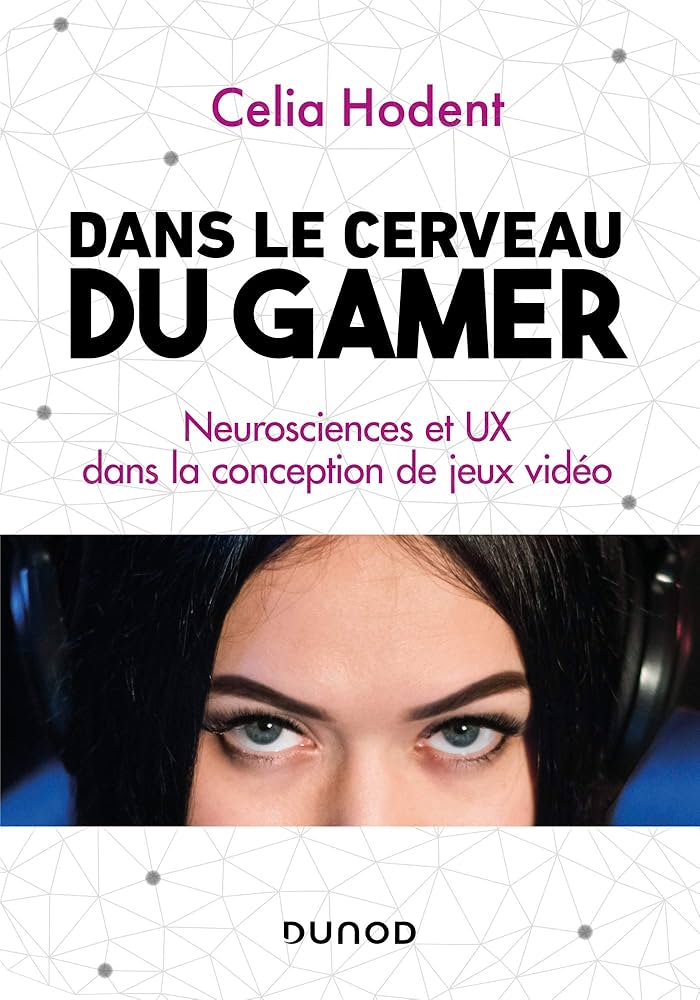
Anaïs: As for books, without hesitation: UX in the Gamer's Brain: Neuroscience and User Experience in Video Games by Célia Hodent. It's fascinating.
Regarding the overall vision of the profession, I often think back to a UX Days conference from two or three years ago on systemic design. A designer explained how he had redesigned an entire hospital department without any digital dimension: reopening the physical space, repositioning the nurses' station at the center of the action so that they could intervene more quickly, optimizing the way families are guided… That's what resonates with me: designing for the real world.
The final word
Inès & Paul: What if you had to imagine AI in a few years?
Anaïs: I think that professionally, we'll see fewer purely operational profiles and many more highly specialized "Prompt Engineer" roles, each focused on a specific domain . We might see Prompt Engineers working in development or design rather than traditional profiles. That's how our jobs will transform!
Inès & Paul: To conclude, what message would you like to send to the UX community?
Anaïs: Let's stay the course! We won't be replaced tomorrow. Let's continue to prove the value of our approach by putting the human element into our designs , especially when the products challenge our beliefs. Let's use design as a lever to defend the issues that truly matter.

Inès Mallick
Digital Marketing & Communications Assistant at UX-Republic

Paul Courtois
Digital Marketing & Communications Assistant at UX-Republic
